
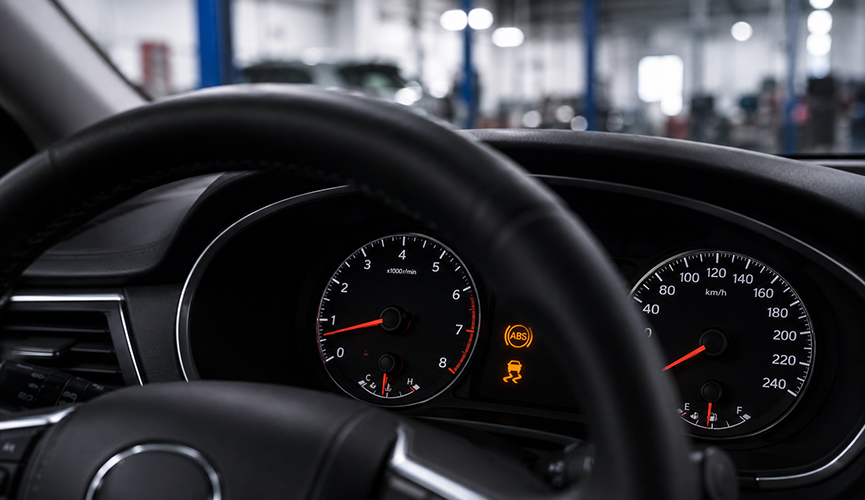
You’re driving along, perhaps heading down Nebo Road or navigating the afternoon rush on the Bruce Highway, when two glowing amber glyphs suddenly pop up on your dashboard: the ABS (Anti-lock Braking System) light and the Traction Control icon.
Seeing multiple warning lights illuminate at the exact same moment can cause an immediate wave of driver anxiety. What went wrong? Are your brakes about to fail completely?
Let’s break down exactly what happens when these systems go offline, what causes the fault, and how regional driving conditions around Central Queensland play a unique role in tripping these dashboard warnings.
Help! My ABS and Traction Control Light Is On—Is It Safe to Drive?
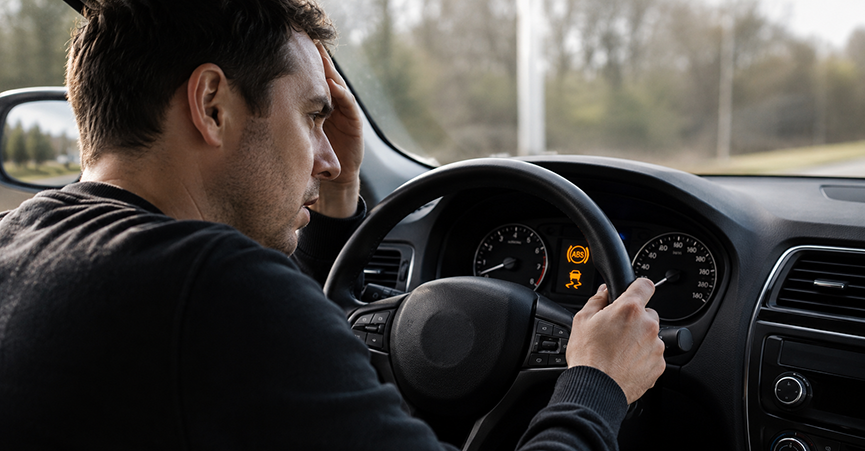
Yes, you can generally still drive your car safely to a repair shop when your ABS and traction control lights are on, because your standard mechanical brakes will continue to slow the vehicle down normally. However, all automatic emergency safety features—including anti-skid controls and anti-lock pulse braking—are completely disabled while these warnings are active.
CRITICAL WARNING:
Glance down at your cluster. If the red brake warning light (the one usually associated with your handbrake) is illuminated alongside the amber ABS and traction control lights, pull over safely immediately. This combination indicates a severe hydraulic failure or a dangerous drop in system pressure, meaning you could lose complete braking power at any second.
If it is only the amber safety system lights that are on, your vehicle will drive, but its handling limits will change dramatically. Without anti-lock braking and electronic stability features, your tires can easily lock up during a sudden panic stop, sending the car into an uncontrollable slide. If you encounter a sudden tropical downpour or slick oil patches on local Mackay roads, you must leave significantly more space between you and the vehicle ahead, brake much earlier, and avoid aggressive acceleration. If you notice any changes to how the pedal feels under your foot, it’s time to book an immediate car repair mackay drivers rely on to restore factory safety parameters.
The Connection: Why Do Both Lights Turn On Together?
Drivers often wonder why two completely different warning symbols light up at the exact same moment. The reason is simple: your Anti-lock Braking System (ABS), Traction Control System (TCS), and Electronic Stability Control (ESC) are all deeply interconnected parts of your vehicle’s electronic chassis network.
Think of them as operating on a shared data highway. While the ABS is designed to prevent your wheels from locking up and skidding under braking, the traction control system prevents your wheels from spinning out of control under acceleration. Electronic Stability Control (ESC) steps in to keep the vehicle tracking straight if it senses a lateral slide.
Because their jobs are so closely linked, they share the exact same brain—the ABS control module—and read the exact same data network of wheel speed sensors. If a single sensor at one corner of your car stops sending accurate information to the central computer, all three systems lose the data they need to keep you safe. Rather than operating on dangerous guesswork, the computer safely shuts down all auxiliary safety features simultaneously, illuminating multiple dashboard warnings to let you know the vehicle has reverted to standard manual handling.
Why Is ABS and Traction Control Light On? The 6 Most Common Causes
When both dashboard indicators come on together, the root issue is typically found within their shared infrastructure. Here are the five most common culprits:
Faulty or Dirty Wheel Speed Sensors
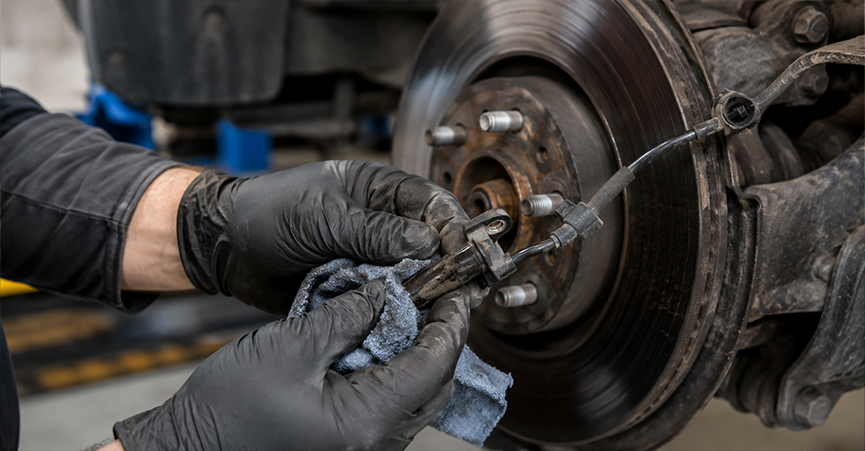
Each of your wheels has a dedicated sensor mounted near the brake rotor that constantly monitors how fast that specific tyre is rotating. Because these sensors sit out in the open wheel wells, they are constantly bombarded by road debris, mud, and metallic brake dust. If thick grime blocks the magnetic pickup on the sensor, it can no longer read the wheel’s speed, causing the system to trip a fault code.
Low Brake Fluid Levels
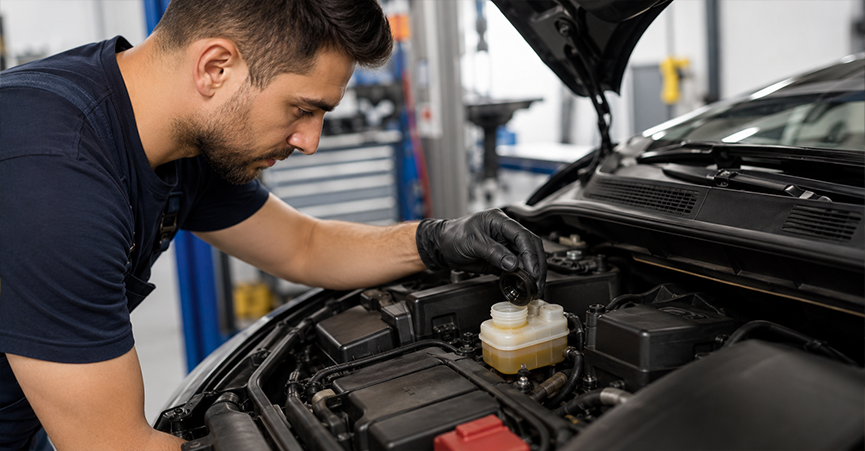
Your ABS module relies on steady hydraulic pressure to pulse your brakes during an emergency. If your brake fluid drops below the safe line in the reservoir under the bonnet, the fluid level sensor will instantly trigger the dashboard warnings. Keep in mind that a low fluid level often serves as a warning sign that your brake pads are heavily worn down, meaning the fluid has dropped further down into the calipers to compensate for the thin pad material.
Low Battery Voltage or Alternator Issues
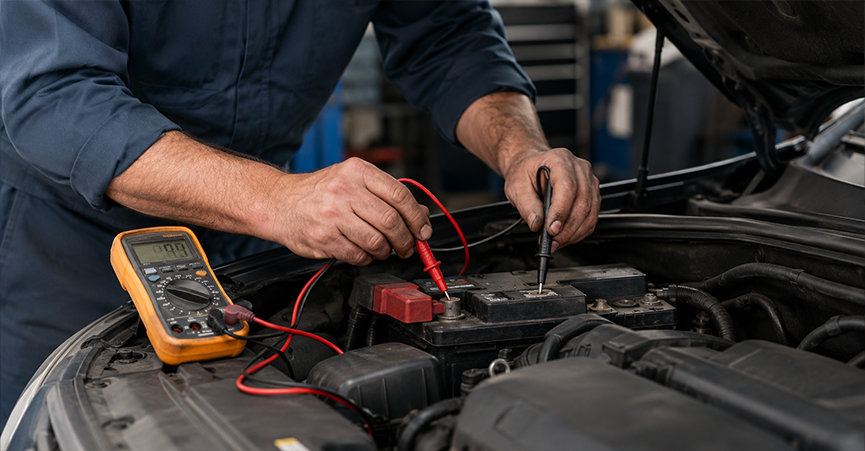
Modern vehicles are essentially rolling computers. When you start your car, the engine management system performs a voltage check. If your car battery is dying or your alternator is failing to supply a stable 12.6 to 14.4 volts, the car’s central computer will actively preserve power by turning off high-draw auxiliary safety systems first. This often results in a flurry of dashboard warnings—including the ABS and TC lights—even if the mechanical brake components are in perfect condition.
Damaged Wheel Bearings or Tone Rings
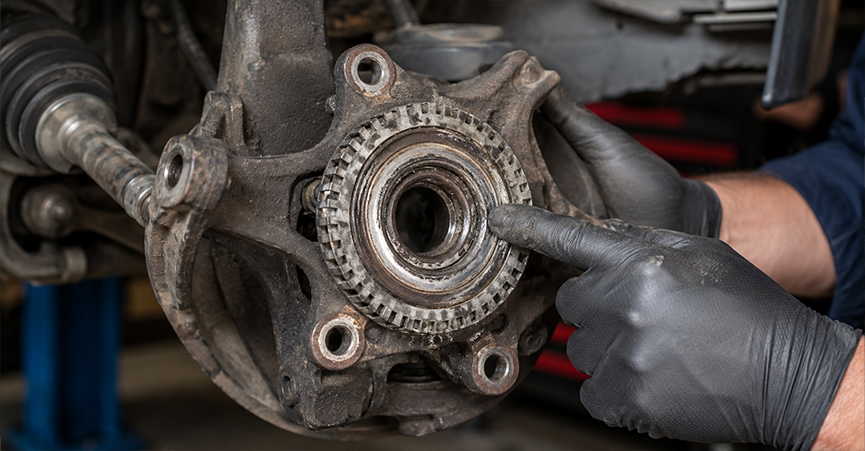
The wheel speed sensor reads wheel rotation by tracking a slotted or magnetic ring called a tone ring, which spins along with the wheel hub assembly. If a wheel bearing begins to develop play and wear down, it can cause the tone ring to wobble out of alignment. Alternatively, rocks can chip the teeth of a tone ring, preventing the sensor from reading a smooth, consistent rhythm.
ABS Control Module Malfunction
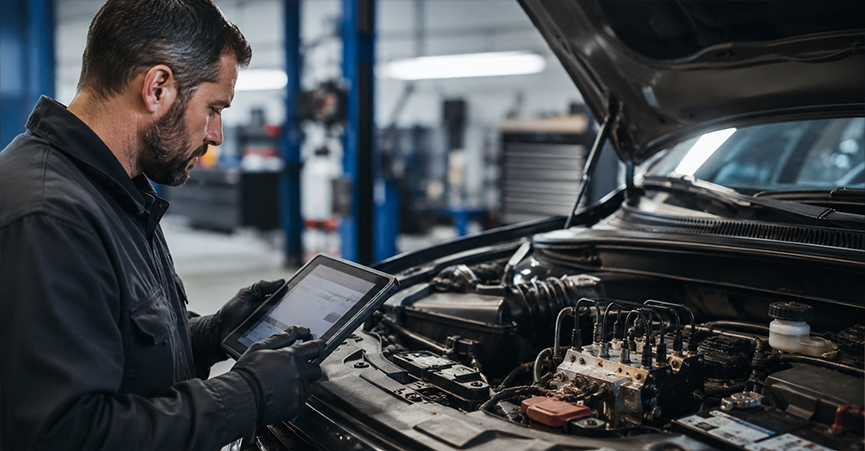
This is the rarest but most severe issue. The ABS control module is the dedicated computer that processes sensor data and physically activates the hydraulic valves during a skid. If the internal circuitry fails due to age, heat, or moisture intrusion, the entire system drops off the vehicle’s communication network, disabling all traction and anti-lock features until the computer module is repaired or replaced.
Faulty Brake Pedal Switch
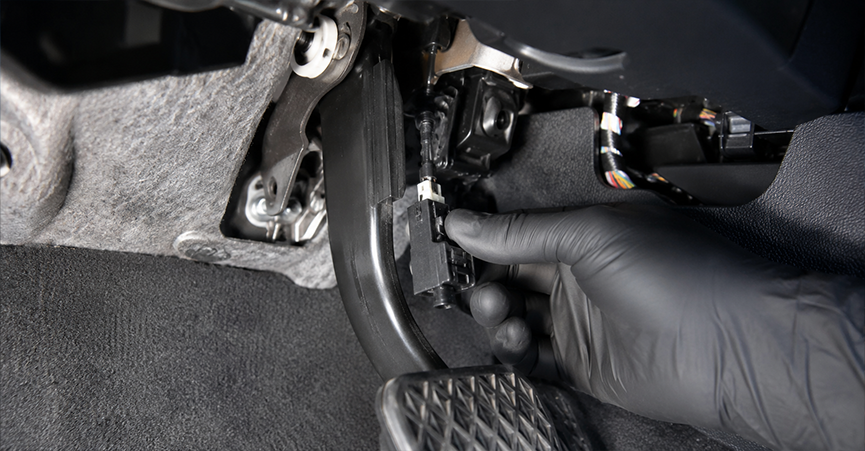
Located right underneath your dashboard next to the brake pedal arm, the brake pedal switch tells your vehicle’s computer the exact millisecond your foot presses the brakes. This switch doesn’t just activate your tail lights; it sends a critical operational signal to the ABS and traction control computers. If the contacts inside the switch wear out or the plunger gets knocked out of adjustment, the computer will detect a contradiction in data—sensing hydraulic brake pressure increase without receiving a matching signal from the pedal switch. To prevent an improper calculation during an emergency, the system will instantly flag a fault code and disable both dashboard lights.
Why Is My ABS Light and Traction Control Light On? Aussie Car Quirks
If you are operating a vehicle in Central Queensland, generic online car advice won’t always cut it. The specific cars we drive and the environment we subject them to play a massive role in triggering these electronic faults.
Common Local Vehicles with Known ABS Issues
- Holden Commodore (VE & VF Models): These iconic Australian family cars and utes are notorious for dashboard warnings. The rear ABS wiring loom is routed tightly near the suspension arms. Over time, the harness rubs against the body or stretches, breaking the delicate copper wires internally and throwing instant ABS/stability control errors.
- Toyota HiLux & Ford Ranger: As local workhorses, these four-wheel drives regularly carry heavy trays and tow loads, putting immense stress on wheel bearings. When the rear axle seals leak differential oil onto the internal ABS tone rings, it covers them in slick oil and grime, blinding the speed sensors completely.
Mackay Environmental Factors
Our local climate behaves like a perfect storm for automotive electronics:
- Tropical Downpours: Driving through heavy downpours during the wet season forces high-pressure water into aging, weathered rubber electrical connectors behind the wheels, causing temporary short circuits.
- Regional Dirt Roads & Corrugation: Taking your vehicle out on unsealed corrugated roads shakes wiring harnesses loose and creates a fine, powdery dust that coats magnetic sensors far faster than standard city driving.
- Coastal Salt Air: Living close to the ocean means salt-laden moisture accelerates corrosion inside exposed electrical grounds and connectors, creating high electrical resistance that trips low-voltage sensor codes.
If your vehicle has been exposed to these rugged local conditions and the dashboard warnings won’t clear, consulting a qualified auto mechanic mackay team will ensure the fault is tracked down before it causes broader electrical issues.
How to Troubleshoot an ABS Light and Traction Control Light On
If you like to handle basic vehicle maintenance at home before visiting a workshop, you can check these actionable things yourself using this quick diagnostic checklist:
- Inspect the Brake Fluid: Pop your bonnet and locate the translucent brake fluid reservoir near the firewall on the driver’s side. If the fluid sits below the “MIN” line, top it off with the exact grade of fluid specified on the cap (usually DOT 3 or DOT 4). Keep in mind that low fluid levels often indicate heavily worn brake pads that need an inspection by a professional car mechanic mackay drivers trust.
- Perform a Visual Sensor Inspection: Park the car safely on a flat surface, turn the steering wheel completely to one side, and look inside the front wheel arches. Locate the thin black sensor wires running behind the brake rotors. Inspect them for obvious physical damage, loose connections, heavy road debris, or thick caked-on mud.
- Test the Battery Voltage: A weak or dying car battery can send highly unstable voltage to your car’s central modules, triggering a flurry of false dashboard warnings upon startup. Use a multimeter to ensure your battery reads at least 12.6 volts when the engine is off and close to 14 volts when running.
- Understand OBD-II Scanner Limitations: Many DIY enthusiasts buy a cheap, generic pocket scanner and get confused when it reports “No Codes Found” while the lights are clearly glowing. Standard readers only scan powertrain codes (engine issues starting with a ‘P’). To diagnose traction or anti-lock faults, you require a specialized scanner capable of pulling chassis codes (starting with a ‘C’) directly from the ABS control unit.
What to Expect During a Professional ABS & Traction Control Diagnostic
When you drop your car off at a workshop to address an electronic safety system fault, the diagnostic process involves much more than just clearing the code and hoping for the best.
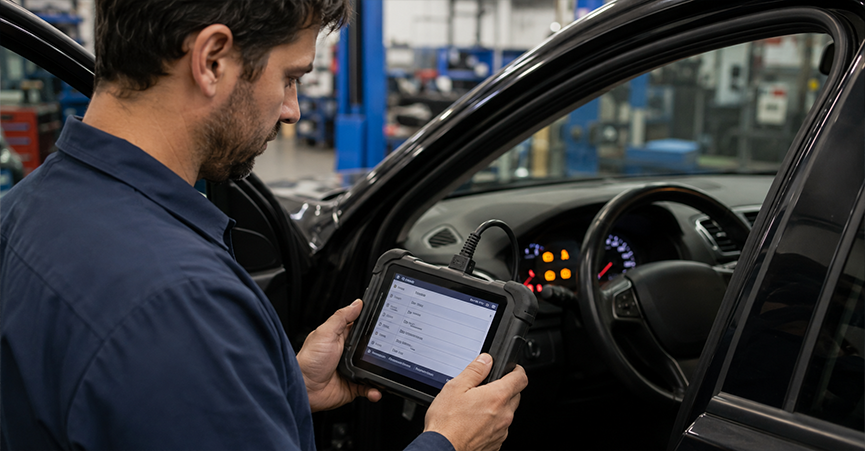
A trusted car mechanic mackay professional will plug a high-end diagnostic scan tool into the vehicle’s OBD port to read the live communication log. Rather than blindly guessing which part is broken, the mechanic can set the scanner to record live data streaming and take the car for a brief test drive. By observing the digital readout, they can see exactly what speed each individual wheel is reporting in real time.
If three wheels read a steady 60 km/h while the rear left drops intermittently to 0 km/h, the technician instantly knows exactly where the circuit is failing. This live analysis isolates whether the problem is a dead sensor, a damaged tone ring, or a broken wire inside the harness, saving you from spending hundreds of dollars swapping out parts you don’t actually need.
Secure Your Safety: Expert ABS Diagnostics in Mackay
Driving around Central Queensland without functioning anti-lock brakes or traction control isn’t worth the risk—especially when the wet season hits and sudden storms turn local bitumen into a slip-and-slide.
At AE Auto Electrical & Mechanical (AEMAC), we specialize in advanced vehicle diagnostics, combining precise mechanical knowledge with deep auto-electrical expertise. Our workshop is fully equipped with state-of-the-art chassis scanning tools to pinpoint exactly why your dashboard lights are illuminated, allowing us to fix the root cause quickly and get you back on the road safely.
Don’t ignore the warning signs on your dash. Head over to aemac.com.au to book your advanced diagnostic check with our expert team today.
Frequently Asked Questions
Why does my car AC blow cold while driving but warm when idling?
This points to a broken radiator fan or a dirty condenser. Cruising down the highway forces natural airflow through the grille to cool the system down, but when you stop at a red light, it requires the electric fan to pull air through mechanically.
How much does it cost to fix a car aircon blowing warm air in Australia?
A standard leak test and professional regas for older cars using R134a gas generally costs between $150 and $300 AUD. Newer cars using R1234yf gas cost slightly more due to the premium price of the gas. Component replacements (compressors or condensers) require a custom part-and-labor quote.
How often should I get my car aircon serviced?
Most manufacturers recommend a professional inspection and service every 1 to 2 years. Systems can naturally lose up to 10% of their gas annually through rubber lines and seals, making a preventative check before summer the safest bet.