
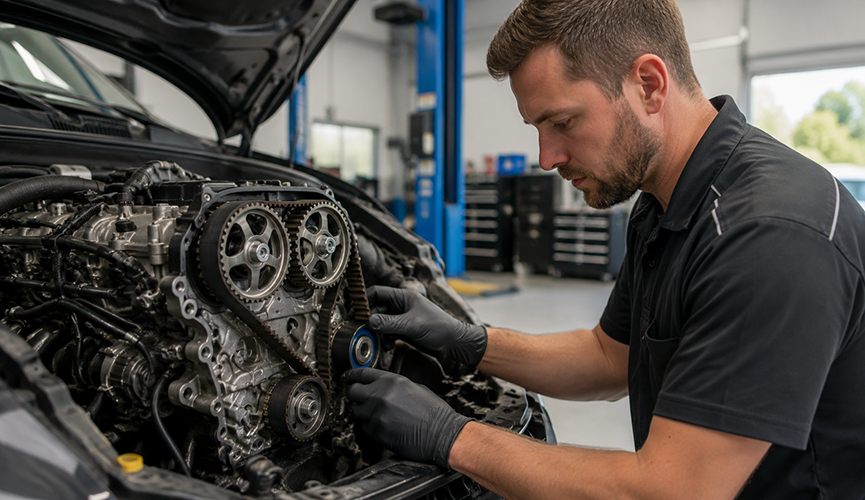
One worn-out part is all it takes to stop your engine completely. It does not give much warning, and when it fails, the damage can be severe.
Most drivers focus on oil changes and tyres, but few think about the part that controls how the entire engine runs. That is where the timing belt comes in.
If you have been wondering what is a timing belt, it is the system that keeps your engine working in perfect order. It controls when parts move, when valves open, and how everything stays in sync. When it wears out, the impact is not small. It can lead to serious engine problems. Knowing how it works and when to seek a professional car mechanic Mackay to replace it gives you a clear advantage in properly maintaining your vehicle.
What is a Timing Belt and What Does It Do for Your Engine?
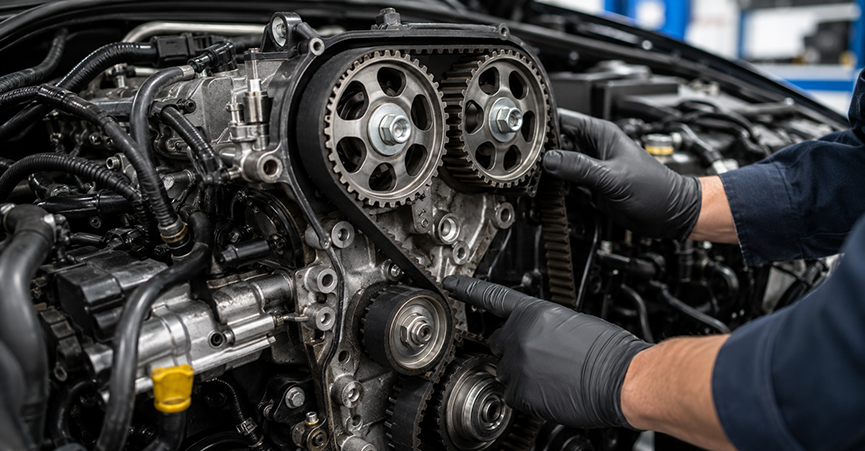
So, what is a timing belt and what does it do?
Think of it as the conductor of your engine. It keeps all the moving parts working together at the right time. The belt connects the crankshaft and camshaft, making sure engine valves open and close exactly when they should.
This timing system is essential. If the timing is even slightly off, performance drops. If it fails completely, the pistons and valves can collide.
What is the function of a timing belt
- Keeps the crankshaft and camshaft in sync
- Ensures valves open and close at the right time
- Maintains smooth engine performance
- Prevents internal engine damage
The purpose of a timing belt is simple but critical. It controls timing so your engine runs safely and efficiently. If the belt slips or breaks, the result can be a broken timing belt situation that leads to major engine damage.
Timing Belt vs Drive Belt vs Serpentine Belt: Identifying the difference
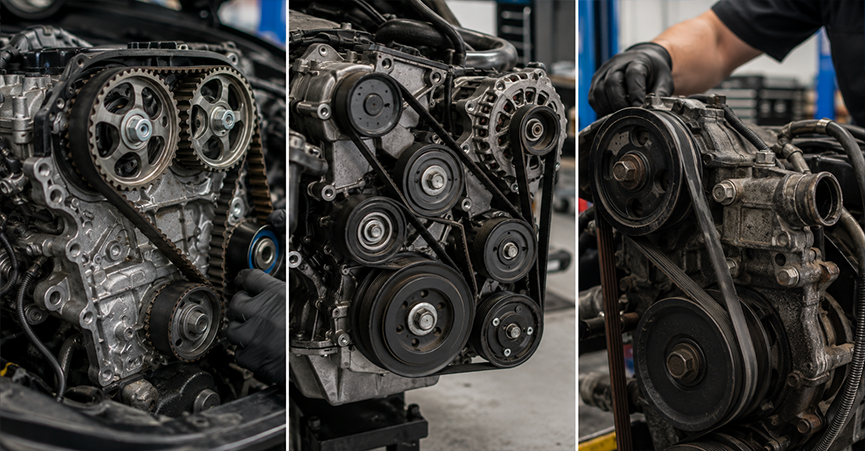
Many drivers confuse different belts in the engine. Understanding what is a drive belt vs timing belt helps avoid that confusion.
Timing Belt
- Located inside the engine
- Controls internal engine timing
- Critical for engine survival
Serpentine Belt
- Found outside in the engine bay
- Powers components like the power steering pump, alternator, and air conditioning
- Easier and cheaper to replace
When comparing a serpentine belt vs timing belt, the key difference is function. One supports accessories, the other controls the engine itself. If a serpentine belt fails, you may lose power steering or cooling. If a timing belt fails, the engine may stop completely.
This is why understanding what is a timing belt used for is so important. It is not optional. It is essential.
What is a Timing Belt Kit and Why You Should Not Just Replace the Belt
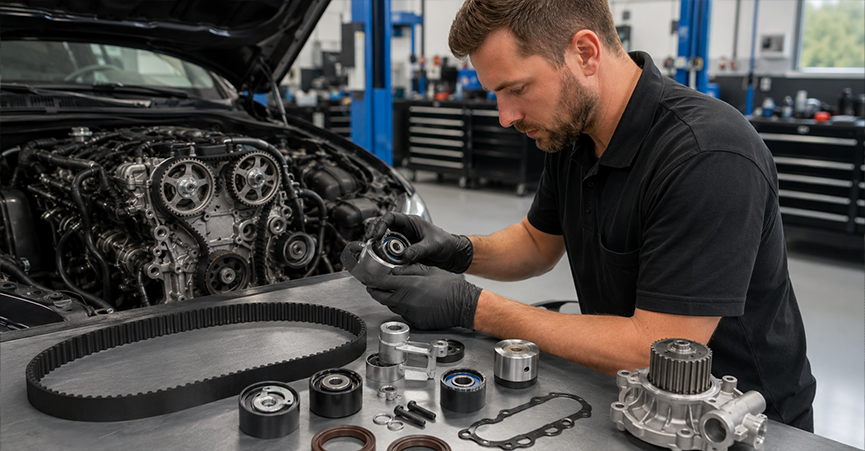
Many people think replacing the belt alone is enough. It is not. So, what is a timing belt kit? It is a complete set of parts designed to work together.
What is included in a timing belt kit
- Timing belt
- Timing belt tensioner
- Idler pulleys
- Sometimes a water pump
The timing belt tensioner keeps the correct tension on the timing system. If the tensioner fails, the belt can slip, even if the belt itself is new. While some simpler tasks can be handled by a mobile mechanic Mackay residents trust for roadside help, a full timing kit replacement is a comprehensive job that requires specialized precision.
Why full replacement matters
- Components wear out at the same rate
- Old parts can cause the new belt to fail
- Prevents repeat labor costs
Ignoring these parts can lead to issues like rattling noises, uneven performance, or even sudden failure. Using full belt kits ensures the entire system works as intended and reduces the risk of future breakdowns.
The Lifespan of a Timing Belt: When to Plan Your Replacement
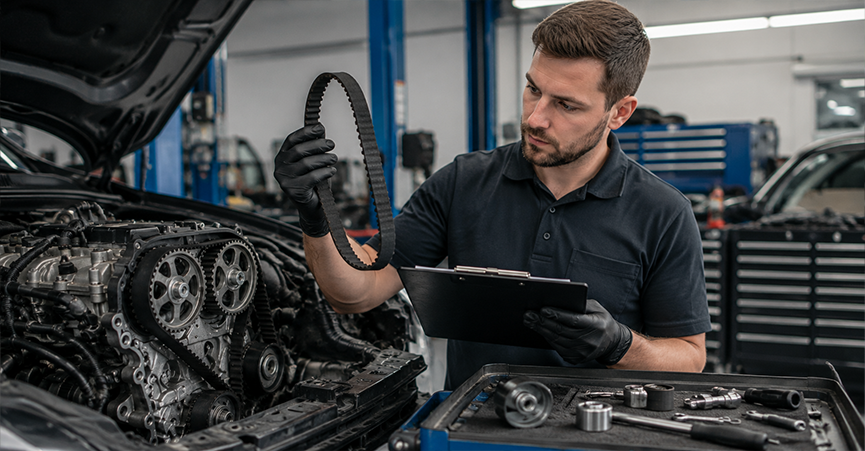
One of the most common questions is what is the lifespan of a timing belt.
Most vehicles require a timing belt replacement between 60,000 and 100,000 miles. Always check your owner’s manual for exact intervals.
Factors that affect lifespan
- Driving conditions
- Heat and engine stress
- Quality of parts
- Maintenance history
Some modern engines use a wet timing belt, which runs inside the engine with oil. This design improves efficiency but requires careful maintenance. Wet timing systems are quieter and more fuel efficient, but they can wear differently than traditional belts.
Signs you may need replacement
- Rattling noises from the engine
- Difficulty starting
- Engine misfires
- Visible wear or cracking
Waiting too long increases the risk of a broken timing belt, which can lead to costly repairs or even complete engine failure.
Timing Chain vs Belt: Which is Better for Your Vehicle?
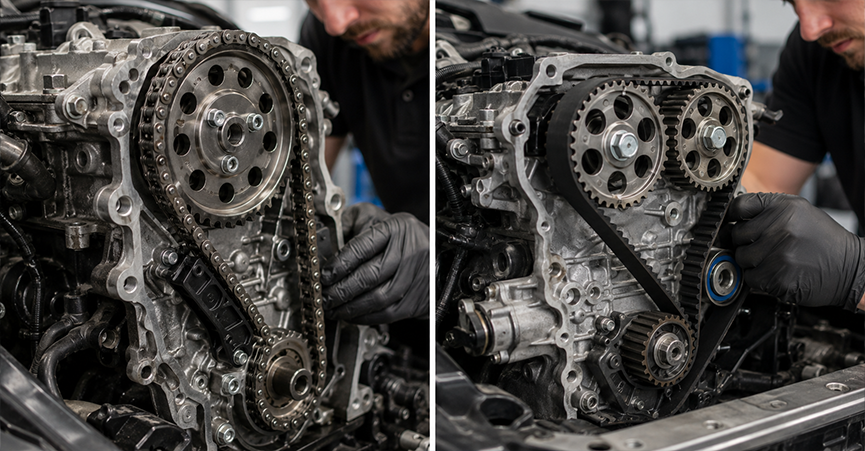
Another common question is what is better a timing chain or a belt?. Both systems serve the same purpose but work differently.
Timing Belt
- Made of reinforced rubber
- Quieter operation
- Needs regular replacement
Timing Chain
- Made of metal
- Lasts longer
- Can be noisier
When comparing a belt or chain, there is no universal winner. It depends on your vehicle design. Timing chains often last longer but can still fail if not maintained. Timing belts require scheduled replacement but are usually quieter and more efficient.
Understanding whether your car uses a timing chain or belt helps you plan maintenance properly and avoid surprises.
Why Aemac Industries is Your First-time-fix Partner for Timing Services
A timing belt job is not a basic repair. It is one of the most important services your car will need. Mistakes during installation can affect the entire timing system. Even a small error can lead to serious damage.
AEMAC Industries focuses on precision and reliability. Every timing belt replacement follows manufacturer standards and uses quality components.
Whether you are at home and need a quick inspection from a mobile mechanic Mackay or you are bringing your vehicle into our workshop for car air conditioning repairs Mackay and timing services, our focus remains the same: quality.
What you can expect
- Accurate diagnosis of timing system issues
- Full inspection of belt kits and related parts
- Skilled handling of complex engine components
- Clear advice based on your vehicle’s needs
This is not just about replacing a part. It is about protecting your engine and avoiding costly repairs in the future. With the right approach, your vehicle stays reliable, efficient, and safe for the long term.
Read more from Aemac blogs: What is a Logbook Service
Final Thoughts
Understanding what is a timing belt is not just about knowing how your engine works. It is about avoiding one of the most expensive and preventable failures in a car. This small component controls the entire timing system, and when it fails, the damage can be severe.
Staying on top of your timing belt replacement schedule, using complete belt kits, and paying attention to early warning signs can save you from major repair costs. It also keeps your vehicle running smoothly and efficiently over the long term.
If you are unsure about your timing system or when your next replacement is due, the team at AEMAC Industries can help with accurate checks and reliable servicing. A well-maintained timing belt is not just maintenance. It is protection for your engine and your investment.
FAQs
What are the symptoms of a bad timing belt?
Common signs include rattling noises, engine misfires, difficulty starting, and visible wear on the belt.
Is the engine ruined if the timing belt breaks?
In many cases, yes. A broken timing belt can cause valves and pistons to collide, leading to severe damage.
How much does it cost to replace a timing belt in Australia?
Costs vary depending on the vehicle, but it is usually a higher-cost service due to labor and part complexity.
What else should you replace when replacing the timing belt?
It is best to replace the timing belt tensioner, pulleys, and sometimes the water pump as part of a full kit.
Does a timing belt make noise before it breaks?
Sometimes. You may hear rattling noises or notice performance issues, but failure can also happen without warning.